Separation of Powers: How the U.S. Government Prevents Any One Group From Becoming Too Powerful
(8th-grade reading level)

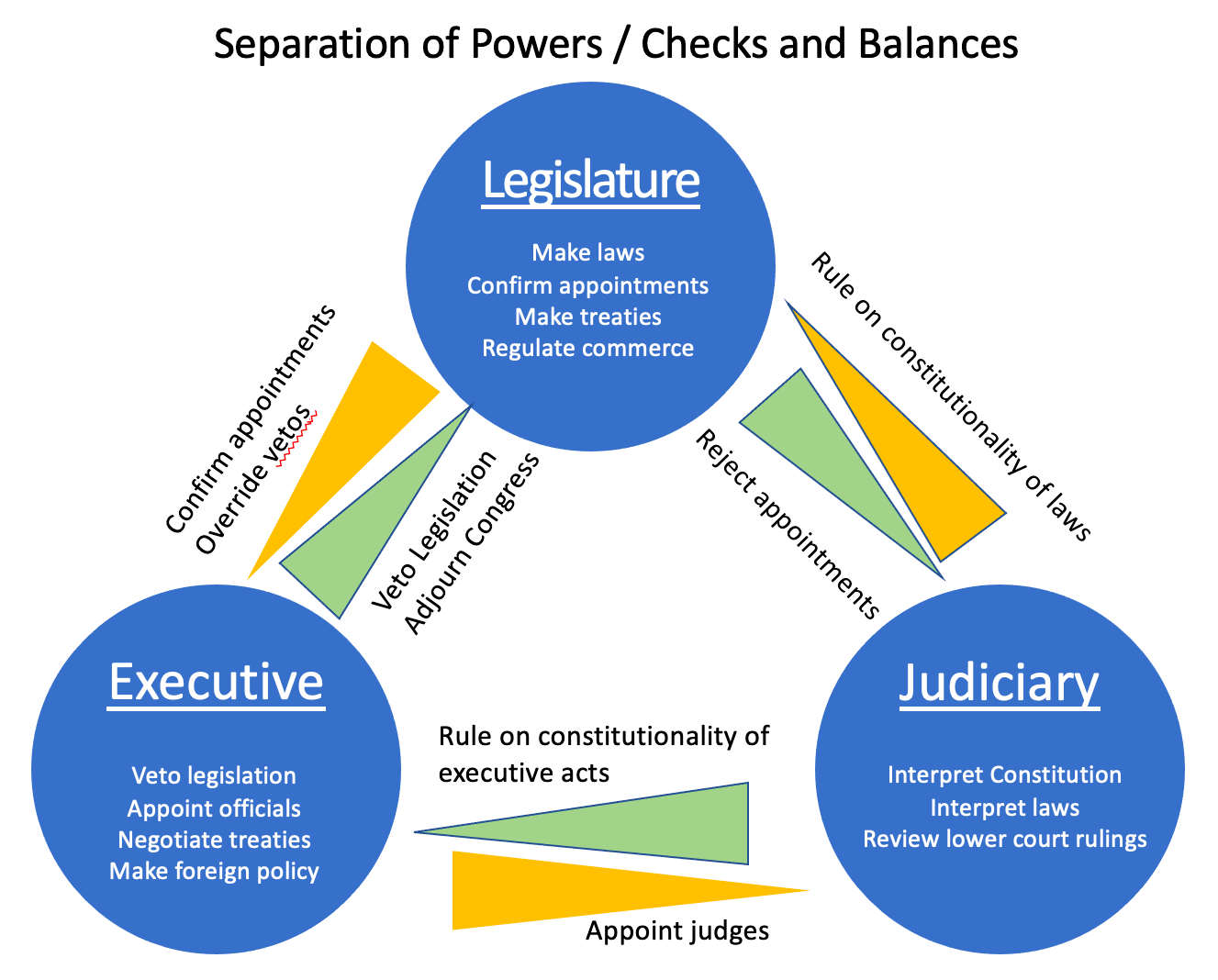
The United States government was designed so no single person or group could control everything. The Founders had seen kings abuse power, so they created a system that splits government authority into three branches. This design is called separation of powers, and it’s meant to protect people’s freedom.
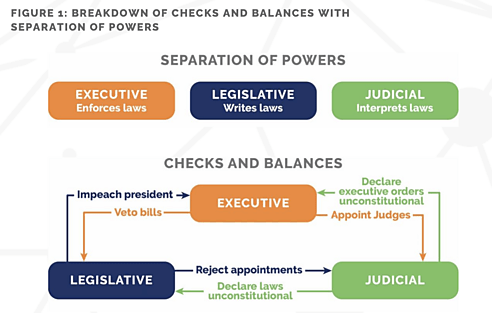
Where Politics Complicate the System
Separation of powers works best when leaders put the Constitution above their political party. But in real life, this doesn’t always happen.
If Congress and the President are from the same political party, some members of Congress may not want to challenge the President—even if they believe he or she went too far. Why?
- They want to stay loyal to their party.
- They don’t want to upset party leaders.
- They worry about losing re-election or campaign support.
- They fear political backlash.
This behavior weakens the system the Founders built. A branch can’t act as a check if leaders are afraid to use their power.
For example:
Congress may hesitate to investigate a president from their own party. Or members may avoid voting against an executive order they believe is unconstitutional because they worry their party will punish them.
The Founders expected courage. But courage is hard when political pressure is strong.
A Real Example of All Three Branches in Action
- Congress passes a law.
- The President vetoes it.
- Congress overrides the veto with a two-thirds vote.
- Later, the Supreme Court reviews the law and decides whether it follows the Constitution.
This chain shows the system working—even when branches disagree.
Discussion & Critical-Thinking Questions
Understanding the Basics
- Why did the Founders want three branches instead of one powerful leader?
- What does each branch do? Explain it in your own words.
- How is “checks and balances” different from “separation of powers”?
Real-World Political Behavior
- What happens to separation of powers when the President and most of Congress belong to the same political party?
- Why might a member of Congress avoid challenging a President from their own party, even if they think the President is wrong?
- How does party loyalty sometimes weaken checks and balances?
- Give a historical or recent example of Congress pushing back against a President from their own party. Why is that rare?
Political Pressure
- Why might politicians fear losing party support more than they fear weakening the Constitution?
- Which branch is best able to resist political pressure, and why?
- How do elections, donations, and party leadership influence a politician’s choices?
Scenario Questions
- A President issues an executive order that many lawmakers think is unconstitutional, but Congress refuses to challenge it. Which branch becomes the main check, and what does that say about the system?
- Congress starts investigating a President, but the investigation is stopped because leaders worry it will “hurt the party.” How does this affect democracy?
Higher-Level Reflection
- What matters more for a healthy democracy: party loyalty or branch independence? Explain.
- What qualities should citizens look for in leaders to make separation of powers work the way it was intended?