This writing is from George Sylvester Counts (1889-1974) He was an American educator, sociologist, and leading figure in social reconstructionist education. He obtained his Ed.D. at the University of Chicago in 1916, taught at Teachers College, Columbia University (1927–1955), and served as a political activist (American Labor Party chair) alongside his academic work. Initially influenced by John Dewey’s progressive education, Counts became its most forceful critic, arguing that schools must not merely reflect society but deliberately help build a more democratic, equitable social order. His ideas paved the way for later critical‐pedagogy theorists.
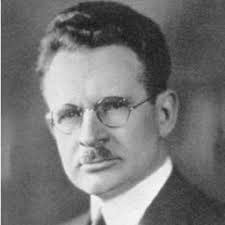
- Counts’s insistence that “neutrality” is a myth remains vital as we confront questions about whose values our curricula promote. His call for teachers to own their expertise and become active participants in civic life speaks directly to contemporary debates over educator voice, curriculum standards, and social justice in schools. Embedding Counts’s vision in your blog can inspire fellow educators to reflect on their role not just as transmitters of knowledge but as architects of democratic possibility.
Dare the School Build a New Social Order?
GEORGE S. COUNTS – If we may now assume that the child will be imposed upon in some fashion by the various elements in his environment, the real question is not whether imposition will take place, but rather from what source it will come.
If we were to answer this question in terms of the past, there could, I think, be but one answer: on all genuinely crucial matters the school follows the wishes of the groups or classes that actually rule society; on minor matters the school is sometimes allowed a certain measure of freedom. But the future may be unlike the past. Or perhaps I should say that teachers, if they could increase sufficiently their stock of courage, intelligence, and vision, might become a social force of some magnitude.
About this eventuality I am not over sanguine, but a society lacking leadership as ours does, might even accept the guidance of teachers. Through powerful organizations they might at least reach the public conscience and come to exercise a larger measure of control over the schools than hitherto. They would then have to assume some responsibility for the more fundamental forms of imposition which, according to my argument, cannot be avoided.
That the teachers should deliberately reach for power and then make the most of their conquest is my firm conviction. To the extent that they are permitted to fashion the curriculum and the procedures of the school, they will definitely and positively influence the social attitudes, ideals, and behavior of the coming generation. In doing this they should resort to no subterfuge or false modesty.
They should say neither that they are merely teaching the truth nor that they are unwilling to wield power in their own right. The first position is false and the second is a confession of incompetence. It is my observation that the men and women who have affected the course of human events are those who have not hesitated to use the power that has come to them. Representing as they do not the interests of the moment or of any special class, but rather the common and abiding interests of the people, teachers are under heavy social obligation to protect and further those interests.
In this they occupy a relatively unique position in society. Also, since the profession should embrace scientists and scholars of the highest rank, as well as teachers working at all levels of the educational system, it has at its disposal, as no other group, the knowledge and wisdom of the ages. It is scarcely thinkable that these men and women would ever act as selfishly or bungle as badly as have the so-called “practical” men of our generation—the politicians, the financiers, the industrialists.
If all of these facts are taken into account, instead of shunning power, the profession should rather seek power and then strive to use that power fully and wisely and in the interests of the great masses of the people.
The point should be emphasized that teachers possess no magic secret to power. While their work should give them a certain moral advantage, they must expect to encounter the usual obstacles blocking the road to leadership. They should not be deceived by the pious humbug with which public men commonly flatter the members of the profession.
To expect ruling groups or classes to give precedence to teachers on important matters, because of age or sex or sentiment, is to refuse to face realities. It was one of the proverbs of the agrarian order that a spring never rises higher than its source. So the power that teachers exercise in the schools can be no greater than the power they wield in society.
Moreover, while organization is necessary, teachers should not think of their problem primarily in terms of organizing and presenting a united front to the world, the flesh, and the devil. In order to be effective they must throw off completely the slave psychology that has dominated the mind of the pedagogue more or less since the days of ancient Greece. They must be prepared to stand on their own feet and win for their ideas the support of the masses of the people.
Education as a force for social regeneration must march hand in hand with the living and creative forces of the social order. In their own lives, teachers must bridge the gap between school and society and play some part in the fashioning of those great common purposes which should bind the two together.
This brings us to the question of the kind of imposition in which teachers should engage, if they had the power. Our obligations, I think, grow out of the social situation. We live in troublous times; we live in an age of profound change; we live in an age of revolution.
Indeed, it is highly doubtful whether man ever lived in a more eventful period than the present. In order to match our epoch, we would probably have to go back to the fall of the ancient empires or even to that unrecorded age when men first abandoned the natural arts of hunting, fishing, and trapping and began to experiment with agriculture and the settled life. Today we are witnessing the rise of a civilization quite without precedent in human history—a civilization founded on science, technology, and machinery, possessing the most extraordinary power, and rapidly making of the entire world a single great society.
Because of forces already released, whether in the field of economics, politics, morals, religion, or art, the old molds are being broken, and the peoples of the earth are everywhere seething with strange ideas and passions. If life were peaceful and quiet and undisturbed by great issues, we might, with some show of wisdom, center our attention on the nature of the child. But with the world as it is, we cannot afford for a single instant to remove our eyes from the social scene or shift our attention from the peculiar needs of the age.
In this new world that is forming, there is one set of issues which is peculiarly fundamental and which is certain to be the center of bitter and prolonged struggle. I refer to those issues which may be styled economic. President Butler has well stated the case: “For a generation and more past,” he says, “the center of human interest has been moving from the point which it occupied for some four hundred years to a new point which it bids fair to occupy for a time equally long. The shift in the position of the center of gravity in human interest has been from politics to economics; from considerations that had to do with forms of government, with the establishment and protection of individual liberty, to considerations that have to do with the production, distribution, and consumption of wealth.”
Consider the present condition of the nation. Who among us, if he had not been reared amid our institutions, could believe his eyes as he surveys the economic situation, or his ears as he listens to solemn disquisitions by our financial and political leaders on the cause and cure of the depression! Here is a society that manifests the most extraordinary contradictions: a mastery over the forces of nature, surpassing the wildest dreams of antiquity, is accompanied by extreme material insecurity; dire poverty walks hand in hand with the most extravagant living the world has ever known; an abundance of goods of all kinds is coupled with privation, misery, and even starvation; an excess of production is seriously offered as the underlying cause of severe physical suffering; breakfastless children march to school past bankrupt shops laden with rich foods gathered from the ends of the earth; strong men by the million walk the streets in a futile search for employment and with the exhaustion of hope enter the ranks of the damned;
great captains of industry close factories without warning and dismiss the workmen by whose labors they have amassed huge fortunes through the years; automatic machinery increasingly displaces men and threatens society with a growing contingent of the permanently unemployed; racketeers and gangsters, with the connivance of public officials, fasten themselves on the channels of trade and exact toll at the end of the machine gun; economic parasitism, whether within or without the law, is so prevalent that the tradition of honest labor is showing signs of decay; the wages paid to the workers are too meager to enable them to buy back the goods they produce; consumption is subordinated to production and a philosophy of deliberate waste is widely proclaimed as the highest economic wisdom;
The science of psychology is employed to fan the flames of desire so that men may be enslaved by their wants and bound to the wheel of production; a government board advises the cotton-growers to plow under every third row of cotton in order to bolster up the market; both ethical and aesthetic considerations are commonly over‐ridden by “hard‐headed business men” bent on material gain; federal aid to the unemployed is opposed on the ground that it would pauperize the masses when the favored members of society have always lived on a dole; even responsible leaders resort to the practices of the witch doctor and vie with one another in predicting the return of prosperity; an ideal of rugged individualism, evolved in a simple pioneering and agrarian order at a time when free land existed in abundance, is used to justify a system which exploits pitilessly and without thought of the morrow the natural and human resources of the nation and of the world.
If the benefits of industrialism are to accrue fully to the people, this deception must be exposed. If the machine is to serve all, and serve all equally, it cannot be the property of the few.
To ask these few to have regard for the common weal, particularly when under the competitive system they are forced always to think first of themselves or perish, is to put too great a strain on human nature. With the present concentration of economic power in the hands of a small class—a condition that is likely to get worse before it gets better—the survival or development of a society that could in any sense be called democratic is unthinkable.
The hypocrisy which is so characteristic of our public life today is due primarily to our failure to acknowledge the fairly obvious fact that America is the scene of an irreconcilable conflict between two opposing forces. On one side is the democratic tradition inherited from the past; on the other is a system of economic arrangements which increasingly resembles industrial feudalism. Both of these forces cannot survive: one or the other must give way. Unless the democratic tradition is able to organize and conduct a successful attack on the economic system, its complete destruction is inevitable.
If democracy is to survive, it must seek a new economic foundation. Our traditional democracy rested upon small-scale production in both agriculture and industry and a rather general diffusion of the rights of property in capital and natural resources. The driving force at the root of this condition, as we have seen, was the frontier and free land. With the closing of the frontier, the exhaustion of free land, the growth of population, and the coming of large-scale production, the basis of ownership was transformed.
If property rights are to be diffused in industrial society, natural resources and all important forms of capital will have to be collectively owned. Obviously, every citizen cannot hold title to a mine, a factory, a railroad, a department store, or even a thoroughly mechanized farm. This clearly means that, if democracy is to survive in the United States, it must abandon its individualistic affiliations in the sphere of economics.
What precise form a democratic society will take in the age of science and the machine, we cannot know with any assurance today. We must, however, insist on two things: first, that technology be released from the fetters and the domination of every type of special privilege; and, second, that the resulting system of production and distribution be made to serve directly the masses of the people. Within these limits, as I see it, our democratic tradition must of necessity evolve and gradually assume an essentially collectivistic pattern. The only conceivable alternative is the abandonment of the last vestige of democracy and the frank adoption of some modern form of feudalism.